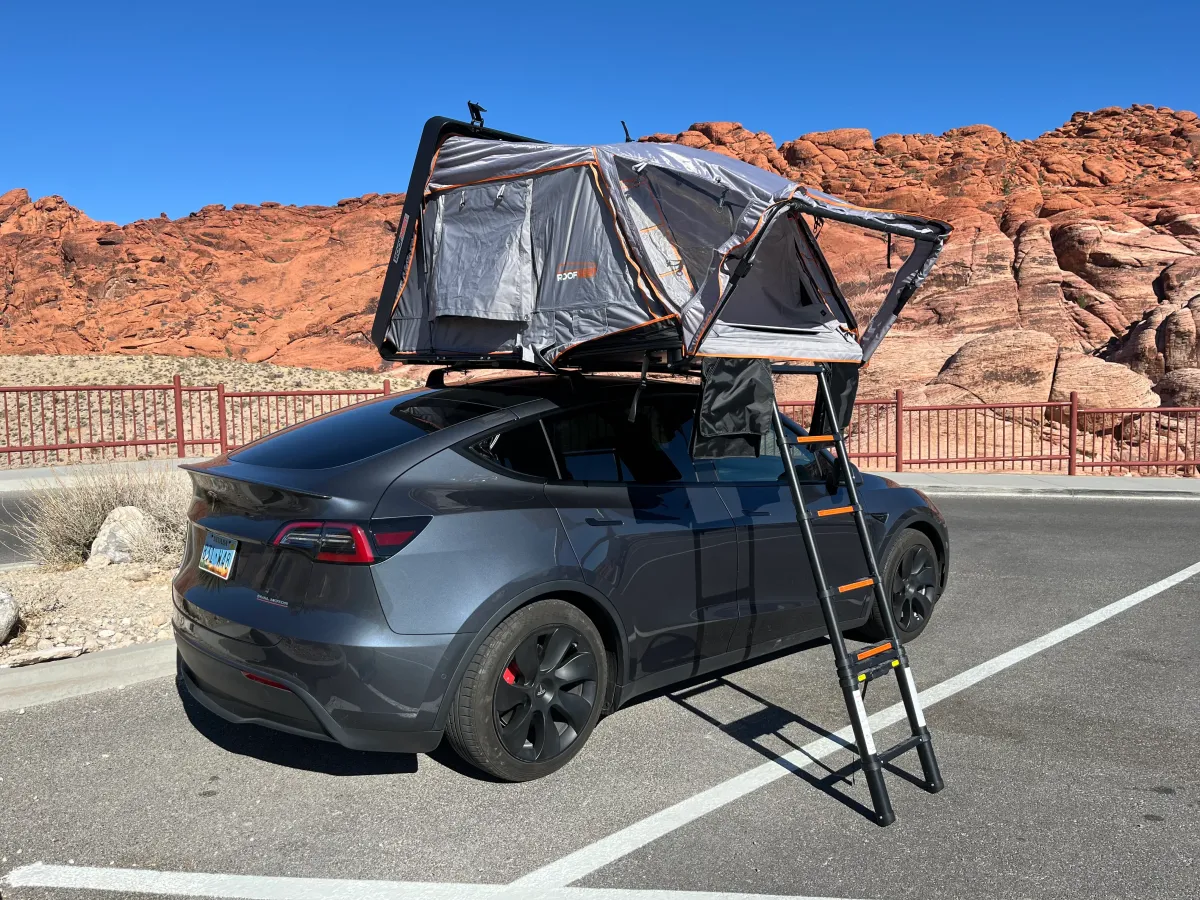
Showering out of a car, without the RV
The objection to car camping is always the same: an RV has a bathroom and this does not.
True. It also has 25 feet of length, a generator, a dump station schedule and a fuel bill. The trade is real in both directions, and the shower question turns out to be the easiest part of it to solve.
Here is how it actually works over two weeks.
You do not need a bathroom, you need access to one
That sounds like a dodge and it is not. On a road trip you are moving through places that already have showers, and the whole problem is knowing which ones and what they cost.
State park and national forest campgrounds. The most reliable option. You do not have to camp there. A day-use pass is usually a few dollars and the showers are generally clean and coin or token operated. This is the backbone of the whole system.
Truck stops. Pilot, Flying J, Love's. A private room with a real shower, towel included, typically $15 to $18. Overbuilt for the purpose and consistently clean, because their actual customers live on the road.
Public pools and rec centers. A few dollars, a shower, and often a laundry nearby. Underused by travelers.
Beaches and trailheads have rinse-off showers, which are cold and fine in July and miserable in October.
Gyms, if you already have a national membership. Worth saying plainly: this is the answer Americans give first, and it is useless to anyone who does not already have one. Do not build a trip around it.
Finding them
Campground apps list shower availability as a filter, and it is usually accurate. The National Forest and state park sites list day-use fees. Truck stops are on every interstate and their apps show shower wait times, which is a detail nobody expects to need and then does.
Pace is the actual answer
The 3-3-3 rule is old RV advice and it solves this problem sideways:
- No more than about 300 miles a day.
- At your site by 3pm.
- Stay three nights when a place is worth it.
Arrive at 3pm and you have time for a shower, laundry and dinner before dark. Drive until 9pm and you have none of them, and that is when the missing bathroom starts to feel like a real problem.
Almost every complaint I hear about car camping is actually a complaint about driving too far.
Toilets, briefly
Campgrounds, trailheads, visitor centers, gas stations and every fast food place in America. The West is well covered. At a dispersed site with nothing, you are digging a cathole 6 to 8 inches deep, 200 feet from water, and packing out the paper. That is the standard, and it is not negotiable in desert soil that does not break anything down.
The honest version
You will shower slightly less often than at home, and considerably more often than you fear. Most guests settle into every other day and stop thinking about it in the first week.
The RV solves this problem by carrying the bathroom with you. The car solves it by keeping you close to places that already have one. The second one drives better.